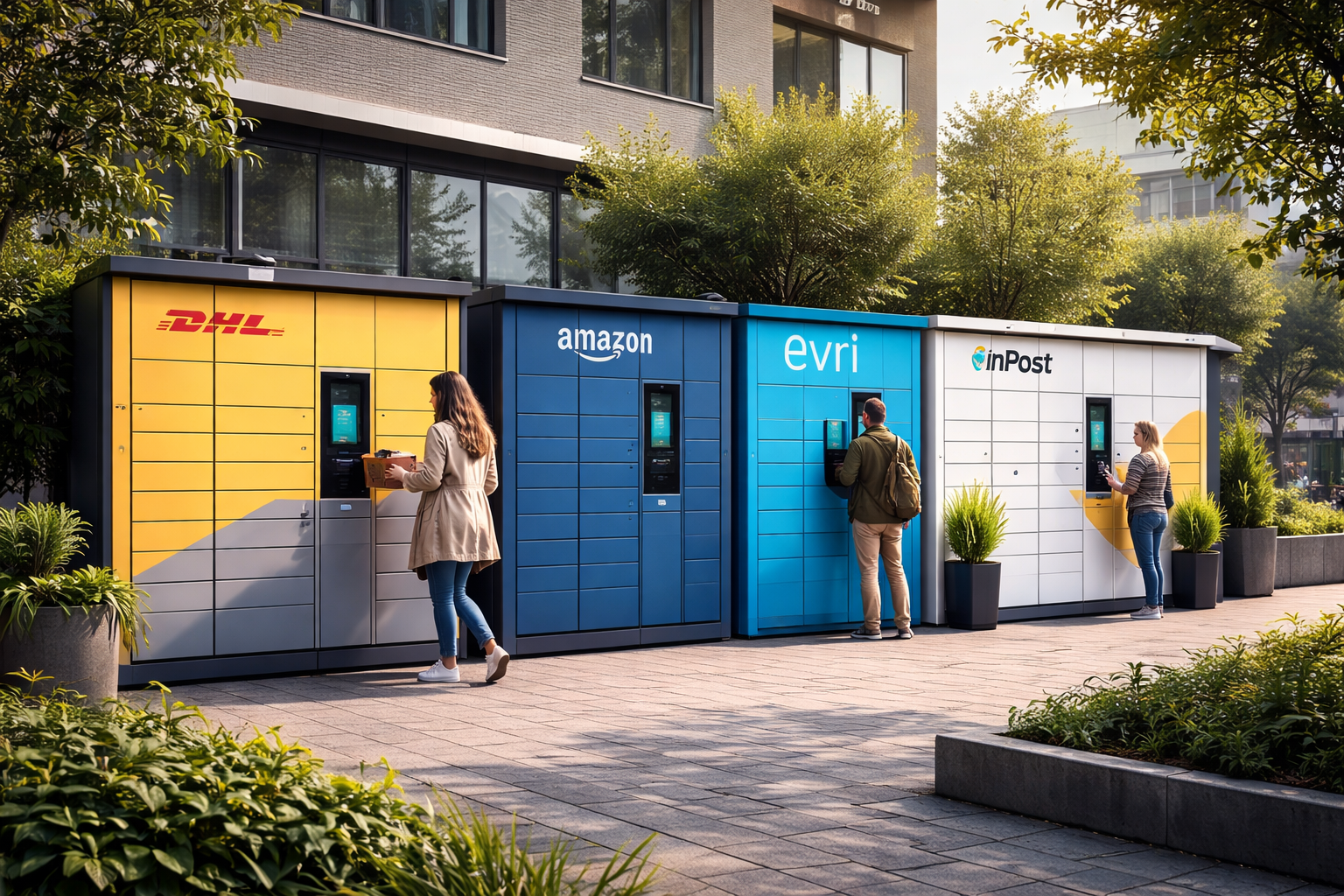
The first wave of out-of-home (OOH) logistics was defined by location control. Carriers such as InPost, Amazon, and national postal operators expanded rapidly by securing high-footfall sites, supermarkets, petrol stations, and urban hubs. In this phase, success was largely determined by geographic convenience. The carrier with the locker closest to the consumer typically won the transaction. However, the market is now entering a new phase. In many urban and suburban environments, it is increasingly common to find multiple locker networks co-located or within immediate proximity. This shift fundamentally changes the basis of competition. Location is no longer a differentiator—it becomes a baseline expectation.
The Rise of Consumer Choice at the Point of Delivery
As locker density increases, consumers are being presented with multiple carrier options at the same physical location. Platforms such as Vinted, Amazon, and eBay are actively enabling this by integrating multiple carrier services at checkout. The result is a shift in decision-making power: consumers can now choose delivery options based not just on proximity, but on price, reliability, and service experience. This mirrors earlier transformations in other logistics segments, where increased infrastructure density led to price transparency and service-based competition. In the OOH context, the locker itself becomes a shared interface, while the underlying carrier network competes on operational performance.
Implications for Carrier Strategy
This evolution places new pressure on carriers to re-focus on core operational metrics:
- Cost efficiency: As price comparison becomes easier, carriers must optimise linehaul, sortation, and last-mile operations to remain competitive.
- Reliability and predictability: Failed deliveries, full lockers, and poor routing decisions become more visible—and more penalised, when alternatives are immediately available.
- Network utilisation: High locker density increases the risk of underutilised assets unless carriers can dynamically allocate volume and optimise flows. In effect, the competitive advantage shifts from “where your lockers are” to “how well your network performs.”.
The Next Phase of OOH Logistics
The co-location of locker infrastructure signals the transition of OOH logistics into a more mature, competitive phase. As physical convenience becomes standardised, differentiation will be driven by operational excellence, integration with marketplaces, and intelligent network orchestration. Carriers that continue to invest solely in footprint expansion risk diminishing returns. Those that pivot towards cost control, reliability, and system-level optimisation will be best positioned to succeed in this next phase