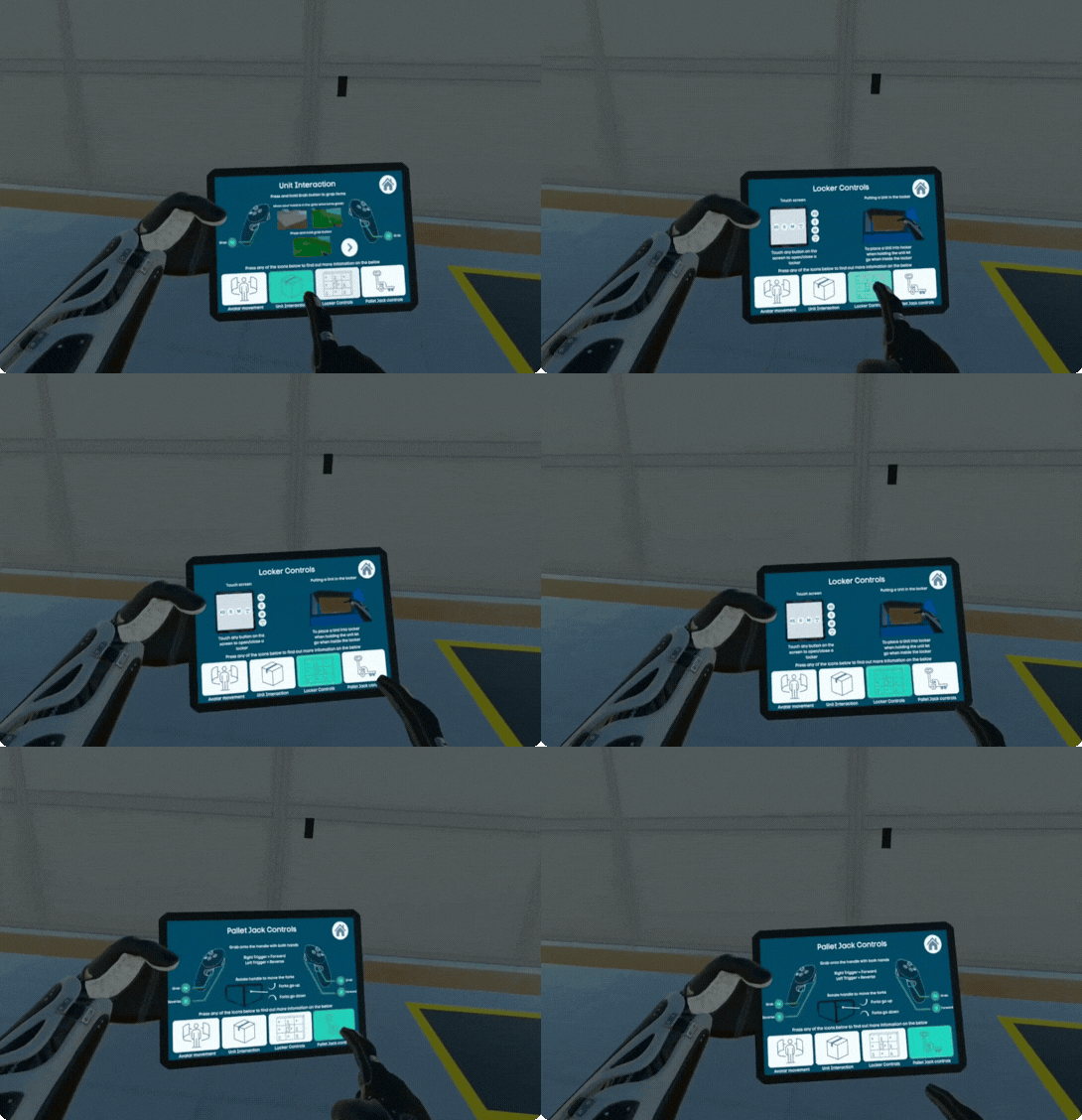
Warehousing operations are becoming more complex, with increasing volumes, tighter delivery expectations, and greater variability in parcel flows. As a result, the gap between designing an operation and successfully implementing it has widened. Traditional tool, static layouts, process maps, and spreadsheets, often struggle to capture how systems behave in real-world conditions.
Extended reality (XR), including virtual reality, is now a viable addition to the operational design process. Advances in accessibility and tooling mean immersive environments can be created quickly and used to simulate real workflows, layouts, and decision points. Teams can walk through facilities before they are built or modified, testing how processes function in practice rather than relying on abstraction.
This approach enables faster learning and more informed decision-making. Bottlenecks can be identified earlier, layouts refined with greater confidence, and operational assumptions validated before investment is committed. It also supports more effective onboarding, allowing teams to experience new environments and processes ahead of deployment.
As the pace of change in logistics continues to accelerate, XR provides a practical way to bridge the gap between design and execution. By embedding immersive simulation into the design process, operators can reduce risk, improve outcomes, and build systems that are better aligned to real-world conditions from day one.